
Accelerated Orthodontics
Accelerated Orthodontics
Accelerated orthodontics refers to a set of techniques and tools that work alongside braces or clear aligners to help teeth move more efficiently through bone, shortening the overall time a patient spends in treatment. At 1st Family Dental in Chicago, this approach is available as part of our broader orthodontic care, combined with digital planning and imaging already used throughout the practice.
What accelerated Orthodontics is
Traditional orthodontic treatment relies on steady, gentle pressure applied over months or years to gradually reposition teeth within the jawbone. Accelerated orthodontics adds supportive methods that can help that bone remodeling happen more efficiently, so the same movement can potentially be achieved in less time. Depending on the case, this may involve additional anchorage points, refined force application, or closer digital monitoring of how teeth are responding.
One common tool in accelerated approaches is the Temporary Anchorage Device (TAD), a small, temporary orthodontic anchor placed to give the orthodontist more precise control over how and where a tooth moves, particularly in complex cases where relying on other teeth for anchorage isn't ideal. Accelerated techniques are typically used as an addition to standard braces or aligners rather than a replacement for them.
How we use it at 1st Family Dental
Our orthodontic team includes several board-certified orthodontists, and Dr. Angela Lu's training included residency-level study of accelerated tooth movement, giving our practice direct familiarity with the science behind these techniques. Temporary Anchorage Devices are available on-site as part of our orthodontic offerings, and are used when an orthodontist determines that extra anchorage would help a case move more efficiently.
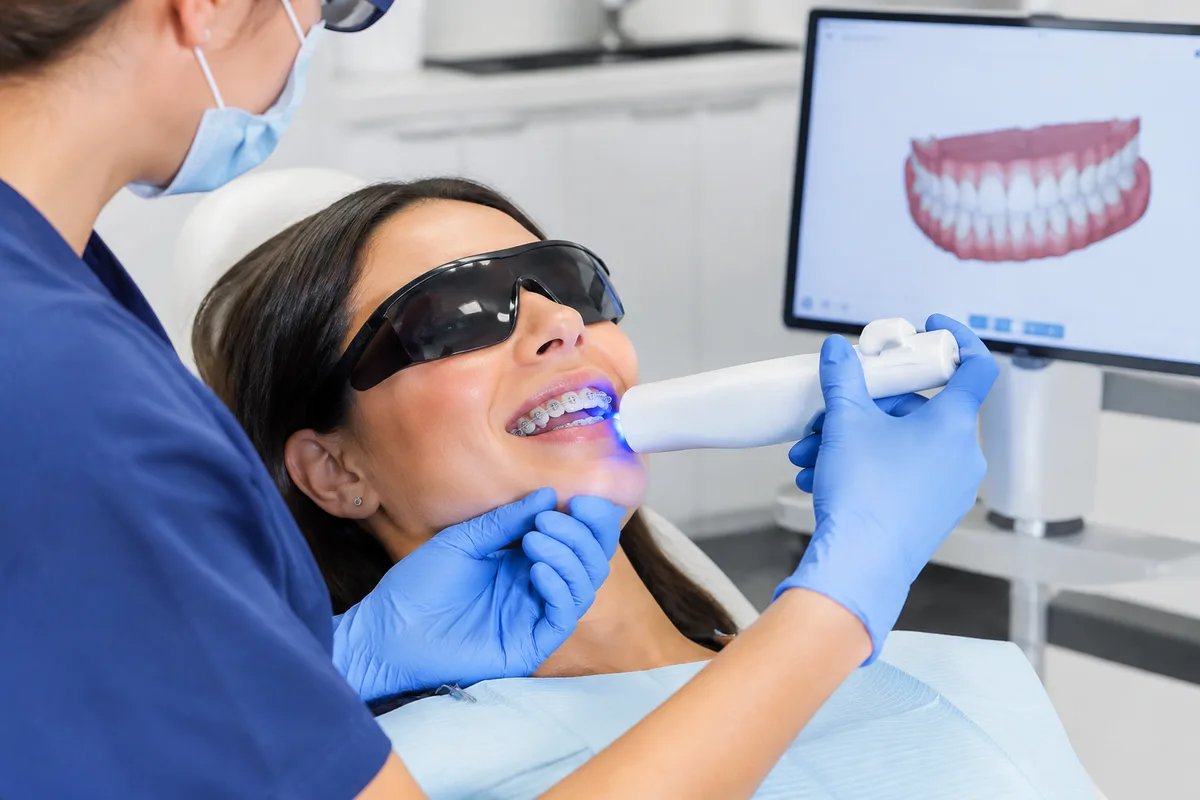
Accelerated orthodontics at our offices is planned using the same digital tools we rely on for orthodontic care generally. An iTero Element Scanner captures a precise 3D impression of your teeth without messy putty, and Digital Smile Simulation lets you preview a possible outcome before treatment begins. These digital records are shared across our offices, so your treatment plan stays consistent no matter which 1st Family Dental location you visit. Accelerated techniques are offered alongside our existing braces, Invisalign, and Teen and Adult Orthodontics services, so your orthodontist can decide whether they're a good fit for your particular case.
What it means for you
For many patients, the appeal of accelerated orthodontics is simple: less time wearing braces or aligners. Shorter treatment can also mean fewer adjustment visits over the course of care, which is useful for patients balancing busy schedules. Because planning relies on digital scans and imaging rather than manual impressions, the process of monitoring your progress tends to be more comfortable and easier for your orthodontist to explain clearly at each visit.
Accelerated methods, including TADs, are also useful in cases where a tooth needs to move in a specific direction without disturbing neighboring teeth. This kind of precision can make treatment more predictable and can reduce the need for compromises elsewhere in the treatment plan.
What to expect during your visit
A visit involving accelerated orthodontics usually begins the same way any orthodontic evaluation does: a review of your bite, a panoramic X-ray or 3D imaging if needed, and an iTero digital scan to map your current tooth positions. Your orthodontist will discuss whether accelerated techniques, such as a TAD, would benefit your specific treatment plan.
If a TAD is recommended, its placement is a brief, in-office procedure, and you'll be given guidance on caring for the area afterward. From there, treatment continues much like standard orthodontic care, with periodic check-ins to adjust your braces or aligners and monitor progress using digital records. Most patients describe the process as similar to routine orthodontic visits, just with an added step at certain appointments.
Frequently asked questions
Is accelerated orthodontics safe?
Accelerated techniques, including Temporary Anchorage Devices, are an established part of orthodontic practice and are planned and monitored by trained orthodontists. As with any orthodontic treatment, your orthodontist will evaluate your bite, bone, and overall oral health before recommending an approach.
Will it be uncomfortable?
Any orthodontic movement can involve some soreness as teeth shift, and placing a TAD involves a brief, localized procedure with local anesthesia. Most patients find the sensation manageable and similar to other orthodontic adjustments.
How often are these techniques used during treatment?
This varies by case. Some patients use accelerated methods throughout treatment, while others only need them at specific stages, such as when a particular tooth needs extra guidance. Your orthodontist will outline the plan that fits your situation.
Who is a good candidate?
Accelerated orthodontics can be considered for teens and adults already planning braces or clear aligner treatment, particularly in cases involving complex tooth movement or limited anchorage. An evaluation with one of our orthodontists is the best way to know whether it fits your treatment goals.
If you're curious whether accelerated orthodontics could shorten your treatment timeline, reach out to 1st Family Dental to schedule an orthodontic consultation.
This content is for general information only and isn't dental or medical advice. Talk with your dentist or orthodontist about your own situation. If you have a medical emergency, call 911.