
Digital X-Rays
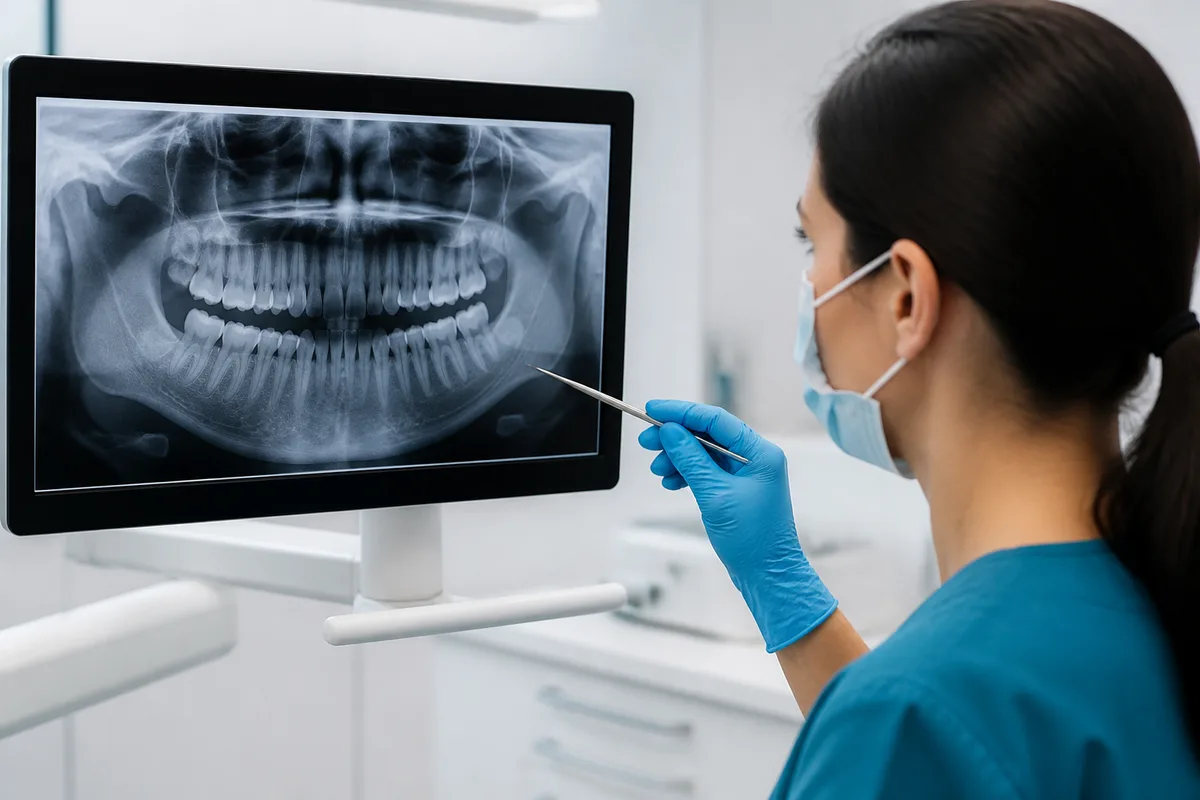
Digital X-Rays
Digital X-rays are a routine part of dental care at 1st Family Dental in Chicago, IL, giving our dentists a clear, detailed view of what's happening beneath the surface of your teeth and gums. Using sensor-based technology instead of traditional film, this imaging appears on screen within seconds and uses far less radiation, making it a comfortable and efficient step in almost every type of visit.
What digital X-Rays is
Digital X-rays use a small electronic sensor placed in or near the mouth to capture images of the teeth, roots, and surrounding bone. Instead of exposing film that then needs to be developed, the sensor sends the image directly to a computer, where it appears almost instantly on a monitor for the dentist to review.
This approach replaced older film-based X-rays, which required more radiation exposure and a wait for processing. Digital sensors need a smaller dose to produce a usable image, and because the image is immediately viewable, there's no delay between capturing it and discussing it with your dentist.
How we use it at 1st Family Dental
At 1st Family Dental, digital X-rays are used to look closely at individual teeth and the surrounding bone, helping to catch issues like decay between teeth, bone changes, or problems near the roots that aren't visible during a routine exam. They work alongside other on-site imaging tools, such as our Panoramic X-Ray for a wide view of the full jaw and 3D Cone Beam CT Imaging when a more detailed, three-dimensional view is needed for planning procedures like implants.
Images captured this way become part of your fully digital record, so they can be reviewed at a later visit or shared securely between our offices without the need to retake films. Our Intraoral Cameras are often used alongside X-rays as well, giving you a direct look at what the dentist sees on the surface, while the X-ray reveals what's happening underneath.
Digital X-rays support many of the services offered at our practice, including routine exams and cleanings, fillings, crowns, root canal therapy, extractions, and evaluation before orthodontic or implant treatment. In each case, the image gives the dentist information that simply can't be seen by looking in the mouth alone.
What it means for you
For patients, digital X-rays generally mean a faster, more comfortable experience. Because the image appears on screen right away, there's no waiting around for film to develop, and your dentist can walk you through what they're seeing in real time. The reduced radiation exposure compared with traditional film is also a meaningful benefit, particularly for patients who need X-rays taken on a regular basis.
Having a clear, on-screen image also makes it easier to understand your own dental health. Rather than relying solely on a verbal description, you can see the area in question, which tends to make conversations about treatment options more straightforward.
What to expect during your visit
Before the X-ray is taken, you'll typically be asked to remove any jewelry near your face and put on a small protective covering. A small sensor is then placed inside your mouth, positioned against the area being imaged. You may be asked to bite down gently or hold still for a moment while the image is captured.
The process itself takes only a few seconds per image, and a full series is generally completed within a few minutes. There's no discomfort involved beyond the sensor's presence in the mouth, which some patients find slightly less comfortable than others depending on its size and placement. Once captured, the image appears on the monitor almost immediately, and your dentist can review it with you before moving forward with the rest of your visit.
Frequently asked questions
Are digital X-rays safe?
Digital X-rays use significantly less radiation than older film-based X-rays, and dental X-rays in general involve a very small amount of exposure. Protective coverings are used during the process as an added precaution.
How long does taking a digital X-ray take?
Capturing each image typically takes just a few seconds, and a full set of X-rays is usually completed within a few minutes. The image is available for review on screen right after it's taken.
How often will I need X-rays?
How frequently X-rays are needed depends on your individual oral health, history, and any specific concerns your dentist is monitoring. Your dentist will let you know what makes sense for your situation during your visit.
Who can have digital X-rays taken?
Digital X-rays are suitable for most patients, including children and adults, as part of routine exams or when investigating a specific concern. If you have questions about your particular circumstances, your dentist can discuss them with you before any imaging is done.
If you'd like to learn more about digital X-rays or schedule a visit, reach out to 1st Family Dental — we're happy to answer your questions.
This content is for general information only and isn't dental or medical advice. Talk with your dentist or orthodontist about your own situation. If you have a medical emergency, call 911.