
Electric Handpieces
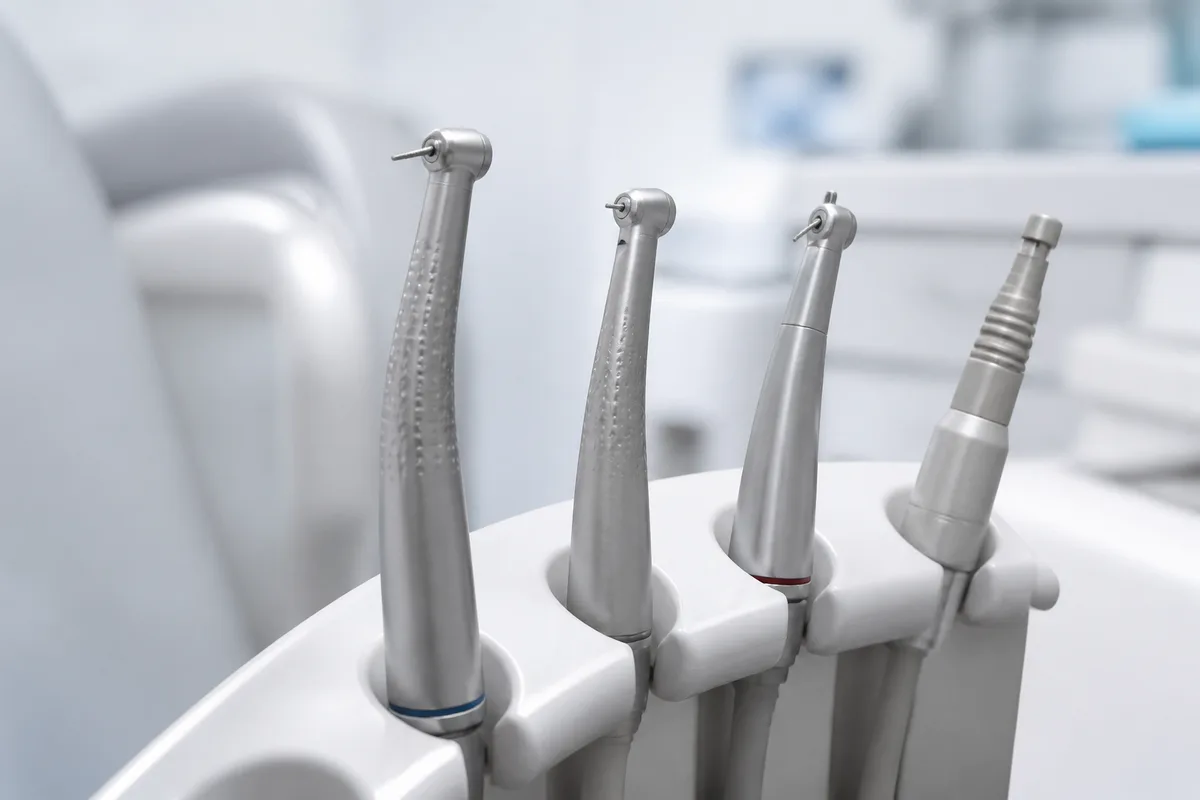
Electric Handpieces
Electric handpieces are the dental drills used for everyday restorative work — shaping teeth for fillings, crowns, and other procedures. At 1st Family Dental in Chicago, IL, our electric handpieces run quieter and smoother than older air-driven drills, with less vibration, which many patients notice right away during routine treatment.
What electric Handpieces is
A dental handpiece is the instrument a dentist holds to remove decay, shape tooth structure, or refine a restoration before it's placed. Older handpieces are powered by compressed air, which tends to produce a higher-pitched sound and a more noticeable, uneven vibration as the bur spins. Electric handpieces instead use a small electric motor to turn the bur at a controlled, consistent speed.
That difference in power delivery is what changes the patient experience. Because the motor maintains steady torque even under pressure, the handpiece doesn't bog down or surge the way air-driven models sometimes can. The result is a tool that cuts smoothly, runs more quietly, and transmits less vibration into the tooth and jaw — three qualities that matter most during procedures that require sitting still with an instrument in your mouth for a period of time.
How we use it at 1st Family Dental
Our electric handpieces are part of the everyday equipment used for restorative procedures such as fillings, crowns, bridges, and inlays and onlays. Because the reduced vibration and quieter sound make the drilling portion of an appointment easier to sit through, they're a practical fit for the kind of restorative and cosmetic dentistry we provide across our Chicago offices.
They also work alongside other equipment in our offices. Digital X-rays and intraoral cameras help our dentists identify decay and plan the shape and extent of a restoration before any drilling begins, so the amount of tooth structure removed is guided by a clear picture rather than guesswork. For procedures involving the tooth's inner canal, rotary endodontic instruments are used in a similar spirit — precision tools designed to make treatment more efficient and controlled. Where a procedure also involves soft tissue, our soft-tissue dental laser is used separately for that portion of care.
What it means for you
For most patients, the main benefit of an electric handpiece is simple comfort. A quieter tool and steadier motion generally make the sound and sensation of drilling less startling, which can be especially helpful for anyone who feels tense about dental visits. Lower vibration can also mean less pressure felt in the jaw and surrounding teeth during a procedure.
Beyond comfort, a consistent cutting speed can support a cleaner, more predictable preparation of the tooth, which is a helpful starting point for a well-fitting filling, crown, or other restoration. None of this changes what the procedure itself involves — it simply changes how the drilling portion feels while it's happening.
What to expect during your visit
If your treatment plan involves a filling, crown, or similar restorative work, the visit typically begins the same way any restorative appointment would: an exam, any necessary digital X-rays, and local anesthetic if needed so the area is numb before treatment starts. Once you're ready, your dentist uses the electric handpiece to remove decay or shape the tooth for the restoration.
During this part of the appointment, you'll hear a low, steady hum rather than a high-pitched whine, and you may notice less buzzing sensation in your jaw compared to what you might expect from a traditional drill. The length of this step depends on the procedure — a simple filling is usually quicker than a crown preparation — but the handpiece itself doesn't add time; it's simply the tool doing the shaping. Afterward, your dentist places the filling material or takes an impression or digital scan for a crown, and you're given any aftercare instructions specific to your treatment.
Frequently asked questions
Is an electric handpiece safe to use?
Yes. Electric handpieces are a standard, widely used piece of dental equipment for restorative procedures. They're operated by your dentist with the same care and attention to your comfort as any other instrument used during treatment.
Will I still feel vibration or hear the drill?
You may still hear a sound and feel some sensation, since the tooth is being shaped, but electric handpieces are designed to run more smoothly and quietly than older air-driven drills, which many patients find easier to tolerate.
How long does treatment with an electric handpiece take?
The handpiece itself doesn't lengthen or shorten an appointment — the overall time depends on the procedure being performed, such as a filling versus a crown preparation. Your dentist can give you a time estimate based on your specific treatment plan.
Who is a good candidate for treatment using an electric handpiece?
Anyone undergoing restorative dental work, from a simple filling to preparation for a crown or bridge, may have an electric handpiece used as part of that treatment. It's a general-purpose tool rather than one reserved for a specific condition or age group.
If you'd like to learn more about how electric handpieces fit into your treatment, reach out to 1st Family Dental to schedule a visit or ask us any questions.
This content is for general information only and isn't dental or medical advice. Talk with your dentist or orthodontist about your own situation. If you have a medical emergency, call 911.