
Fully Digital Records
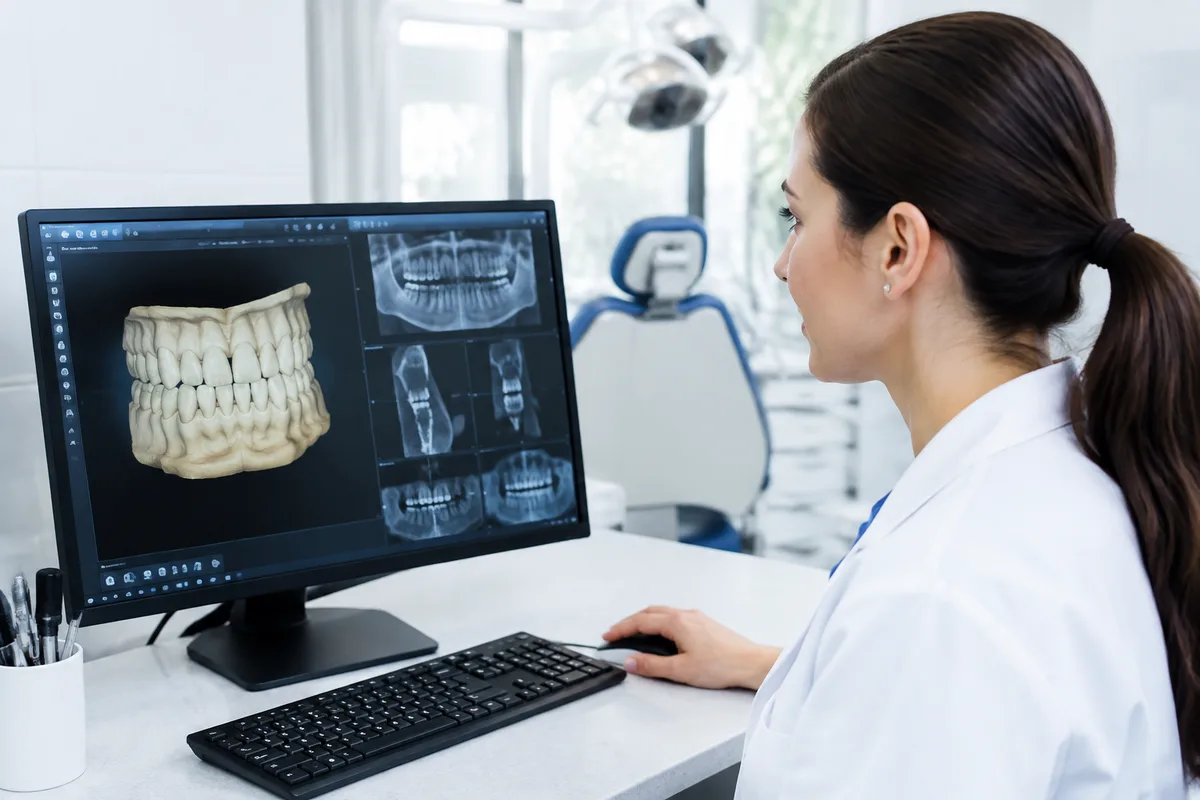
Fully Digital Records
Fully digital records mean your dental history, images, and treatment plans exist as secure electronic files instead of paper charts. At 1st Family Dental, this digital foundation connects the scans, x-rays, and photos taken throughout your care into one accessible record that supports every visit, no matter which of our offices you see.
What fully Digital Records is
Traditional dental offices once relied on paper charts, film x-rays, and handwritten notes stored in filing cabinets. Fully digital records replace that system with electronic charting: your exam findings, imaging, treatment history, and notes are entered and stored digitally from the start.
This shift also changes how images and data move. Instead of physical film that has to be developed or mailed between offices, digital files can be pulled up instantly on a screen, shared securely with a specialist, or referenced during a follow-up visit without waiting for paperwork to catch up.
How we use it at 1st Family Dental
Our paperless charts, imaging, and treatment plans are shared securely across our offices, so your care follows you to any location. That means if you see one of our dentists at one office and later need to visit another, your record — including prior x-rays, scans, and notes — is already there.
This digital system works alongside the other imaging tools used in our offices, including Digital X-Rays, Panoramic X-Ray, 3D Cone Beam CT Imaging, and the iTero Element Scanner. Each of these captures information electronically, which feeds directly into your digital chart rather than requiring separate physical storage. Intraoral Cameras add photos of specific teeth or areas to the same record, and our Online Booking & Patient Portal lets you interact with parts of that record, such as registration forms, before you even arrive.
What it means for you
For patients, digital records generally mean less redundancy. Because your history and images are stored electronically, you typically don't need to fill out the same forms repeatedly or wait for physical files to be located and transferred between appointments.
Digital storage also tends to support clearer communication. Dentists can pull up prior imaging side by side with new scans to compare changes over time, and treatment plans can be reviewed on screen so you can see what's being proposed rather than relying on verbal description alone.
Because records are stored securely rather than in paper form, they are also less vulnerable to being lost, damaged, or misfiled — a common limitation of paper-based systems.
What to expect during your visit
Before your appointment, any new-patient information you complete through the online portal is added to your digital record ahead of time, which can shorten the paperwork portion of your visit. During your appointment, any x-rays, scans, or photos taken — whether from the Digital X-Ray sensors, the Panoramic X-Ray, 3D Cone Beam CT, or the iTero scanner — are captured electronically and appear in your chart right away rather than being processed separately.
Your dentist can review this information on screen with you during the same visit, walking through what the images show. Afterward, your updated record, including any treatment plan notes, is stored and available for reference at future visits or, if needed, at another 1st Family Dental office. There is no separate "records" appointment; this happens as part of your regular visit.
Frequently asked questions
Is my digital dental record secure?
Digital records at 1st Family Dental are stored and shared securely across our offices rather than kept as loose paper files. This is intended to protect your information while still making it accessible to your care team when needed.
Will I need to redo paperwork if I switch offices?
Because charts, imaging, and treatment plans are shared across our offices, your existing record is generally available wherever you're seen within 1st Family Dental, which can reduce the need to repeat forms or retake certain images.
Does having digital records change how long my appointment takes?
Digital records themselves don't add time to a visit; imaging such as x-rays or scans is captured as part of your normal exam and appears in your chart immediately, without the wait associated with developing physical film.
Who benefits from a digital record system?
Any patient receiving ongoing care benefits from having a consistent, accessible record, particularly those who see multiple providers, need imaging compared over time, or visit more than one office location.
If you'd like to know more about how our digital records system works or want to see your own chart and imaging, get in touch with 1st Family Dental to ask or schedule a visit.
This content is for general information only and isn't dental or medical advice. Talk with your dentist or orthodontist about your own situation. If you have a medical emergency, call 911.