
Guided Implant Surgery
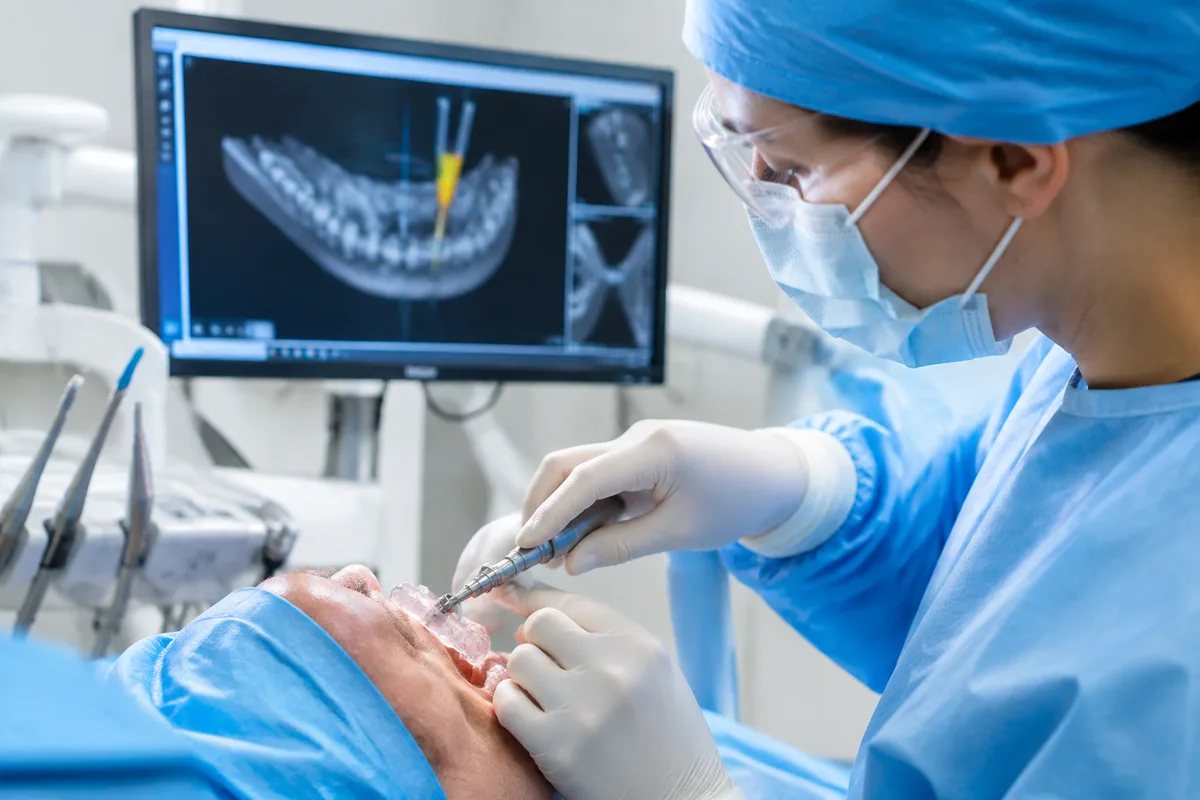
Guided Implant Surgery
Guided implant surgery uses a 3D scan of your jaw to plan the exact position, angle, and depth of each implant before any surgery begins, then carries that plan into the mouth with a custom surgical guide. At 1st Family Dental in Chicago, this planning step is built into how our implant-trained doctors approach implant placement, from a single tooth to full-arch restorations.
What guided Implant Surgery is
Traditional implant placement relies on the surgeon's direct view and feel of the bone during surgery, guided by two-dimensional x-rays taken beforehand. Guided implant surgery adds a digital planning step: a 3D scan captures the bone, nerve pathways, and surrounding tissue in detail, and that data is used to design a plan for each implant's exact position before the patient is ever in the surgical chair.
That digital plan is then translated into a physical or digitally-guided surgical guide, a template that fits over the teeth or gums and directs the placement of the drill and implant to match the plan. In effect, the planning that used to happen partly in the surgeon's head during the procedure now happens ahead of time, on a screen, where it can be reviewed and adjusted before any incision is made.
How we use it at 1st Family Dental
Guided implant surgery at our practice starts with 3D Cone Beam CT Imaging, which shows teeth, bone density, nerve paths, and soft tissue in a single scan. That scan is the foundation for the surgical guide, which places each implant exactly where it was planned. Digital impressions from the iTero Element Scanner can add detail on the teeth and bite, and fully digital records mean the scan and plan travel with you if your treatment involves more than one visit or provider within our offices.
Several members of our team have training that covers implant planning and placement, including guided approaches. Our roster includes:
- Dr. Ghassan Abboud, Prosthodontist — specialty-trained in combined prosthodontics and implants.
- Dr. Faisel Ashtewi, Prosthodontist — a member of the Academy of Osseointegration with training in implant restoration.
- Dr. Tala Ghishan, Prosthodontist — completed an additional year of implant training at a university implant center and is a member of the International Team for Implantology.
- Dr. John Hur, Oral & Maxillofacial Surgeon — trained in complex dental implant surgery using CT-guided skeletal mapping and surgical protocols.
- Dr. Najeeb Abufarha, Dentist — trained in implant placement, guided surgery, bone grafting, and 3D digital treatment planning.
- Dr. Irbad Chowdhury, Implantologist — completed a dental-university-based fellowship focused specifically on implants.
Depending on your case, treatment planning may also connect with related services such as bone grafting, All-on-4 implants, or implant-supported dentures.
What it means for you
Because the implant position is mapped out before surgery, guided placement can make the surgical visit itself more predictable for both patient and clinician. Reviewing the plan on a scan ahead of time gives you and your dentist a shared, visual way to talk through where implants will go and why, before anything is placed.
A surgical guide can also help keep the procedure focused, since the drilling depth and angle are set by the guide rather than judged in the moment. For many patients, this planning step means clearer communication about the number of implants needed and how they relate to nearby teeth, nerves, and sinuses.
What to expect during your visit
Your visit typically begins with a 3D Cone Beam CT scan, a quick, painless imaging pass that captures your jaw in detail. If digital impressions are also needed, the iTero Element Scanner is used to record the shape of your teeth and gums without messy putty trays. This information is combined into a plan for your implant or implants.
Once the plan is finalized, a surgical guide is prepared for the placement appointment. On the day of surgery, the guide is fitted in your mouth, and the implant is placed following the pre-planned path. Local anesthesia is used for comfort, and additional sedation options, including nitrous oxide, may be discussed if you feel anxious about the procedure. Afterward, you'll receive guidance on healing and any follow-up restorative steps, such as a crown or denture, that complete the implant.
Frequently asked questions
Is guided implant surgery safe?
Guided implant surgery is a planning approach built around 3D imaging that maps bone, nerves, and soft tissue before surgery begins. This detailed picture is intended to give the treating dentist or specialist clear information to work from during placement. As with any surgical procedure, your dentist will review your health history and the scan with you beforehand.
Will it hurt?
Implant placement is performed with local anesthesia, and sedation options such as nitrous oxide are available for patients who feel anxious. Many patients describe the sensation as pressure rather than pain during the procedure itself.
How long does the process take?
The imaging and planning stage is generally completed in a single visit, using the 3D Cone Beam CT scan and, if needed, a digital impression. The surgical appointment itself varies by case, from a single implant to multiple implants supporting a bridge or denture, so your dentist will walk you through a timeline specific to your plan.
Who is a candidate for guided implant surgery?
Guided implant surgery can be considered for patients missing one tooth, several teeth, or a full arch, including those exploring All-on-4 implants or implant-supported dentures. Bone grafting may be recommended first if additional bone volume is needed to support an implant. Your dentist can review your scan with you to discuss whether this approach fits your situation.
If you'd like to learn more about guided implant surgery or find out whether it's a good fit for your smile, reach out to 1st Family Dental to schedule a visit.
This content is for general information only and isn't dental or medical advice. Talk with your dentist or orthodontist about your own situation. If you have a medical emergency, call 911.