
Intraoral Cameras
Intraoral Cameras
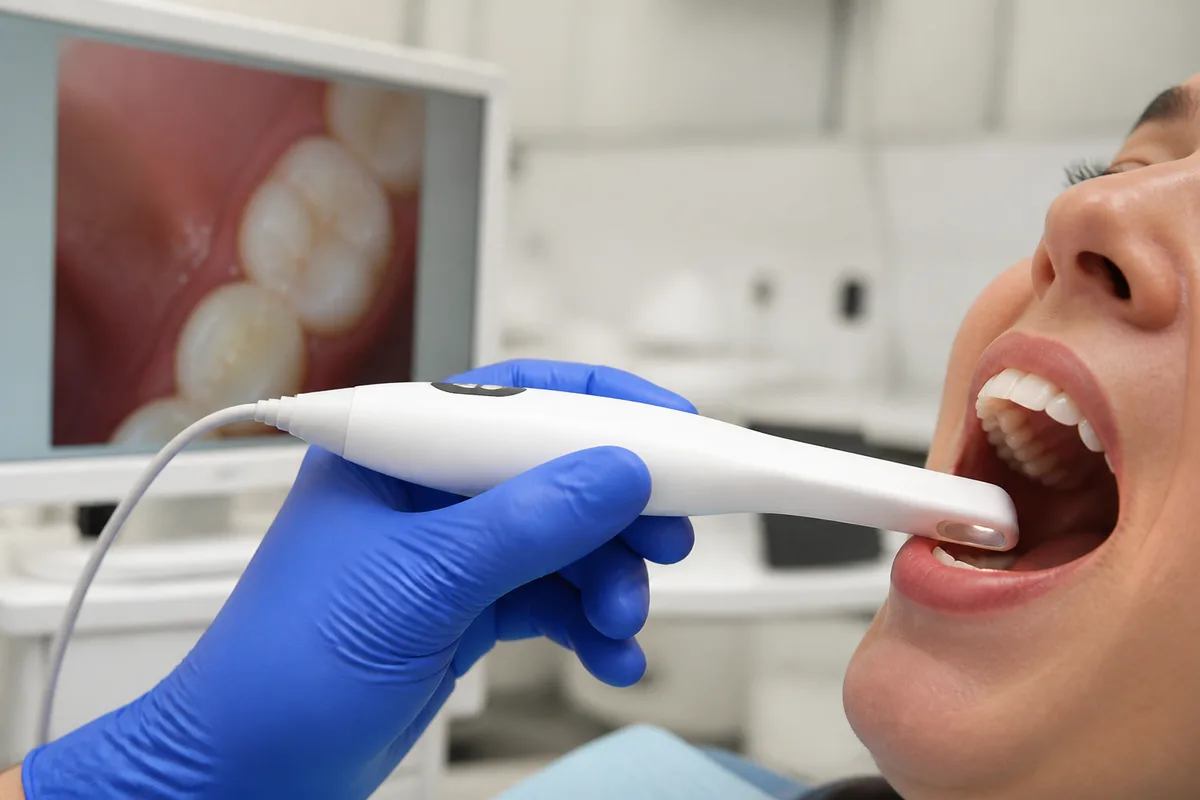
An intraoral camera is a small, pen-sized wand fitted with a light and a lens that lets your dentist show you a live, magnified view of your own teeth and gums on a chair-side monitor. Instead of relying only on a mirror and a verbal description, you see the same image your dentist sees, which makes it easier to understand what is happening in your mouth and why a particular treatment is being recommended.
What intraoral Cameras is
Before intraoral cameras became common, dentists described findings using a mirror, a hand-held explorer, and words alone. Small cracks, early decay, worn fillings, or areas of gum inflammation were often difficult for patients to picture, even with a good explanation. The intraoral camera closes that gap by capturing a close-up, well-lit photograph or video of the tooth surface in real time.
The camera itself is lightweight and about the size of a large pen, with a disposable or sterilizable sheath covering the tip for each patient. It is moved gently around the mouth, tooth by tooth, while the image displays instantly on a nearby screen. No radiation is involved, and the images can be saved as part of your dental record for comparison at future visits.
How we use it at 1st Family Dental
At 1st Family Dental, the intraoral camera is used chairside during routine exams and cleanings, as well as when evaluating a specific concern such as a cracked tooth, a failing filling, or an area of gum irritation. Because the practice keeps fully digital records, images captured with the camera can be stored and shared across our offices, so your visual history is available whether you are back for a follow-up or seeing a different provider within the practice.
The camera is often used alongside other diagnostic tools already in the office, such as digital X-rays and panoramic imaging, to build a fuller picture of your oral health. Where X-rays show what is happening beneath the surface, the intraoral camera shows the surface itself — the color, texture, and condition of enamel, fillings, and gum tissue. Together, these tools support the diagnostic work that goes into exams, preventive care, fillings, crowns, and periodontal treatment.
What it means for you
For patients, the main value of an intraoral camera is clarity. Being able to see a magnified image of your own tooth makes it easier to understand a diagnosis, ask informed questions, and feel confident about a recommended treatment plan rather than simply taking a dentist's word for it.
It can also help with tracking change over time. A photograph taken at one visit can be compared to one taken months or years later, giving both you and your dentist a visual reference for whether a small area of wear or a spot of discoloration has stayed the same or progressed. This kind of visual documentation can support decisions about whether to treat something now or continue monitoring it.
What to expect during your visit
Using an intraoral camera adds only a few minutes to a regular exam or cleaning appointment. After your dentist or hygienist has examined your mouth in the usual way, they may pick up the camera wand and glide it slowly over the teeth and gums, pausing on any area worth a closer look. You will feel light pressure or a gentle touch, similar to a mirror, but nothing sharp or uncomfortable.
As the image appears on the screen, your dentist will typically talk you through what you are seeing, pointing out healthy structures as well as anything that needs attention. There is no special preparation beforehand and no recovery time afterward — you can eat, drink, and go about your day as soon as your appointment ends.
Frequently asked questions
Is an intraoral camera safe?
Yes. The camera is a small optical device with a light source and lens; it does not use radiation or any technique that carries meaningful risk. The tip is covered with a fresh, sterile sheath for each patient.
Will it be uncomfortable?
Most patients find it comfortable. The wand is smooth and lightweight, and it is simply moved along the tooth surfaces the way a mirror would be, without pressure or sharp edges.
How long does it take?
Capturing images typically takes just a few minutes and is usually done as part of a routine exam, cleaning, or a visit to evaluate a specific concern, rather than as a separate appointment.
Who is it suitable for?
Intraoral cameras are suitable for patients of nearly any age, since the process is quick, non-invasive, and does not require any special cooperation beyond holding still briefly, similar to a dental mirror exam.
If you would like to see your own teeth and gums up close and better understand your treatment options, reach out to 1st Family Dental to ask about using an intraoral camera at your next visit.
This content is for general information only and isn't dental or medical advice. Talk with your dentist or orthodontist about your own situation. If you have a medical emergency, call 911.