
Panoramic X-Ray
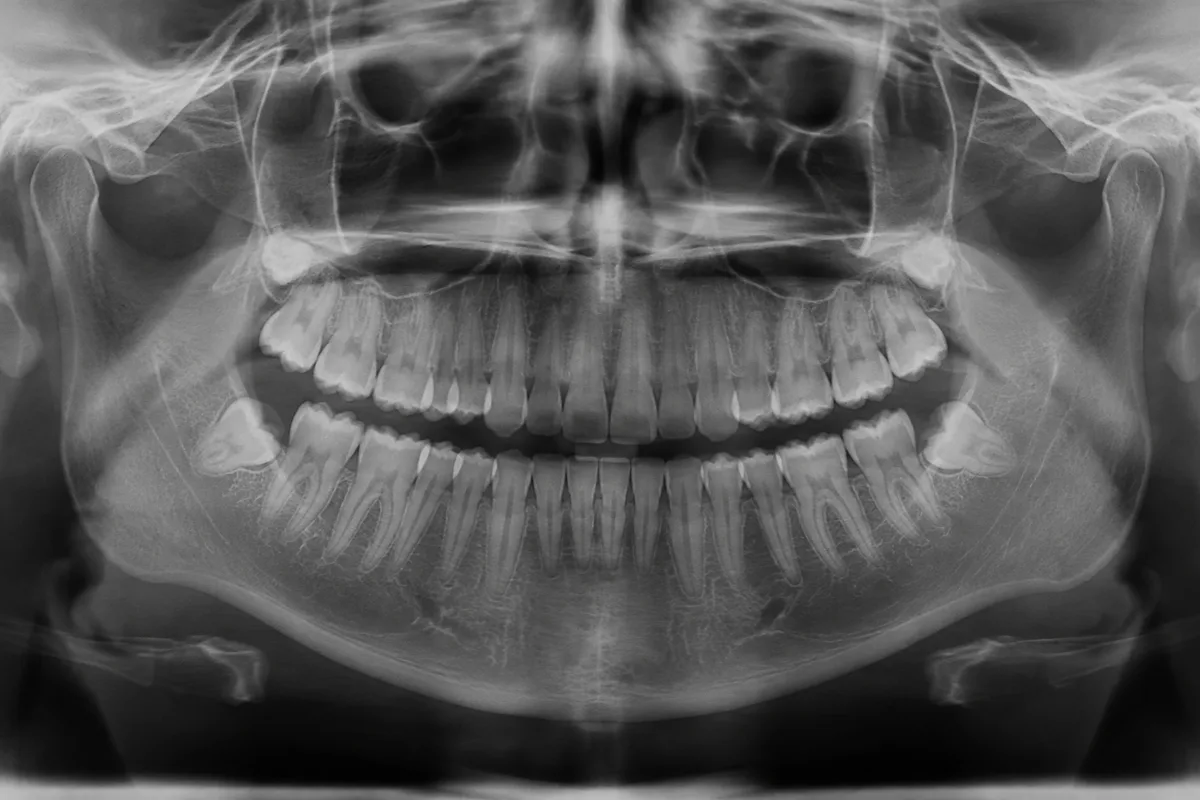
Panoramic X-Ray
A panoramic X-ray gives our dentists a single wide view of your entire jaw, teeth, sinuses, and surrounding structures in one image. It's a straightforward, comfortable step in many exams and treatment plans, helping us look at the full picture of your oral health before deciding on next steps.
What panoramic X-ray is
Unlike a traditional X-ray that captures a small section of the mouth, a panoramic X-ray rotates around your head to produce one continuous image showing both the upper and lower jaw, all the teeth, the jaw joints, and nearby structures like the sinuses. This wide field of view makes it easier to see things that a close-up image might miss, such as impacted teeth, jaw abnormalities, or changes in bone.
Panoramic imaging improved on older methods that required multiple separate films to cover the same area. With one scan, dentists can get an overview of the mouth's structure without needing several individual exposures, which can make the process quicker and simpler for the patient.
How we use it at 1st Family Dental
At 1st Family Dental, the panoramic X-ray helps our dentists spot problems early by giving a full view of the jaw, teeth, and sinuses in one pass. It works alongside our other digital imaging tools, including Digital X-Rays for close-up detail and 3D Cone Beam CT Imaging when a more detailed, three-dimensional view is needed for procedures like implant planning.
Because our records are kept as Fully Digital Records, panoramic images are stored securely and can be reviewed alongside your treatment plan and shared across our offices, so the same image is available no matter which location you visit. Panoramic imaging is commonly part of the evaluation process for services such as wisdom tooth removal, orthodontic planning, and broader restorative or implant treatment, giving the dentist a clear starting point before recommending care.
What it means for you
A wide, single image means fewer separate exposures are typically needed to get an overview of your mouth, which can make the appointment more efficient. Because the image appears on a digital screen, your dentist can point out exactly what they're seeing, making it easier to understand your own oral health and any recommended treatment.
Panoramic X-rays are generally well tolerated because the process is quick and does not require anything to be placed inside the mouth beyond a simple bite positioner. This can make it a more comfortable option for patients who find traditional bitewing X-rays difficult.
What to expect during your visit
Before the scan, you'll be asked to remove any metal items like jewelry, glasses, or removable dental appliances that could interfere with the image. You'll typically stand or sit in one spot while a positioning guide, such as a chin rest or bite piece, helps keep your head steady.
During the scan, the machine's arm moves slowly around your head in a single sweep. You won't feel anything from the X-ray itself, just the need to stay still for a short period while the machine completes its rotation. The full process, from positioning to finished image, generally takes just a few minutes.
Afterward, the image appears on screen almost immediately, allowing your dentist to review it during your same visit and discuss any findings or next steps with you before you leave.
Frequently asked questions
Is a panoramic X-ray safe?
Panoramic X-rays use a low dose of radiation, and dental X-ray equipment is designed to keep exposure as low as reasonably possible. Your dentist will consider your history and needs when deciding how often imaging is appropriate for you.
Does it replace other dental X-rays?
A panoramic X-ray gives a broad overview rather than the fine detail of a single tooth or root. Depending on what your dentist needs to evaluate, it may be used together with Digital X-Rays or 3D Cone Beam CT Imaging rather than in place of them.
How long does the scan take?
The scan itself is brief, usually completing within a minute or two, with the entire visit for positioning and imaging typically taking just a few minutes from start to finish.
Who might need a panoramic X-ray?
Panoramic imaging is commonly used for patients being evaluated for wisdom teeth, orthodontic treatment, jaw concerns, or as part of planning for implants and other restorative work. It can be suitable for most patients, including children and adults, depending on what your dentist is assessing.
If you'd like to learn more about panoramic X-rays or see whether one is recommended as part of your care, reach out to 1st Family Dental to ask about scheduling a visit.
This content is for general information only and isn't dental or medical advice. Talk with your dentist or orthodontist about your own situation. If you have a medical emergency, call 911.