
Rotary Endodontics
Rotary Endodontics
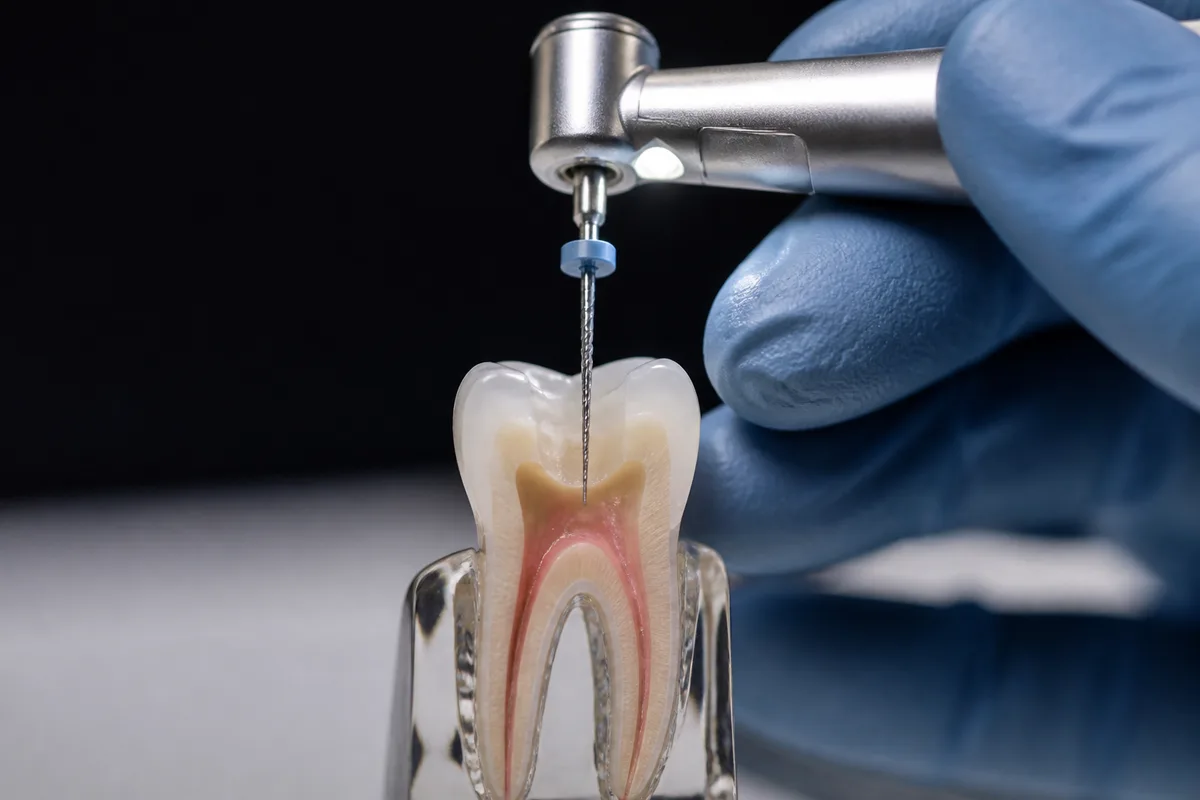
Rotary endodontics refers to the motor-driven instruments used during root canal therapy to clean and shape the inside of a tooth's root canals. At 1st Family Dental in Chicago, IL, this equipment is one of the tools our dentists use to make root canal treatment more precise and more comfortable for patients who need it.
What rotary Endodontics is
Root canal therapy treats a tooth whose inner pulp has become infected or inflamed, often from deep decay, a crack, or repeated dental work on the same tooth. The goal is to remove the damaged tissue from inside the root canals, clean and disinfect the space, and seal it so the tooth can stay in the mouth and function normally.
Traditionally, this cleaning and shaping was done with hand-held stainless steel files, worked manually one at a time. Rotary endodontic systems instead use flexible, nickel-titanium files powered by a small electric motor. These files bend to follow the natural curves of a root canal rather than forcing the canal to match a straight instrument, and the motor moves them in a controlled, consistent motion. This is generally considered an improvement over manual filing alone, since it can shape canals more consistently along their natural path.
How we use it at 1st Family Dental
Rotary endodontic instruments are part of how our dentists perform root canal therapy in the office. Several members of our team have training and continuing education specific to endodontics, so a root canal case can be directed to a dentist whose background includes this focus when appropriate.
Before any root canal, diagnostic imaging helps confirm what's happening beneath the surface. We use digital X-rays and panoramic X-rays to evaluate the tooth and surrounding bone, and 3D Cone Beam CT imaging when a more detailed view of the root anatomy is needed. An intraoral camera can also be used to show you what the dentist sees on the tooth itself. All of this is stored in our fully digital records system, so your images and treatment plan are easy to reference at any visit. Rotary instrumentation is used alongside these tools as part of the actual treatment step, once the canal anatomy has been mapped out.
What it means for you
For patients, the appeal of rotary endodontics is mainly about consistency and comfort. Because the files move in a steady, motor-driven pattern rather than being worked back and forth by hand, treatment can generally proceed with a smoother, more even feel inside the tooth. This can also help treatment move along efficiently, since the dentist isn't manually switching files as frequently as with older manual techniques.
Some general benefits patients associate with rotary endodontics include:
- Consistent shaping — flexible files follow the canal's natural curve rather than forcing a straight path.
- Efficient treatment — a motorized system can move through the cleaning and shaping steps steadily.
- Comfort-focused delivery — used together with local anesthesia and, when appropriate, nitrous oxide sedation for patients who feel anxious about the visit.
What to expect during your visit
A root canal visit typically starts with numbing the area so you're comfortable throughout treatment. The dentist places a small protective barrier around the tooth to keep it clean and dry, then creates a small opening to reach the inner pulp chamber. From there, rotary instruments are used to clean out the damaged tissue and shape the canals, guided by the imaging taken beforehand.
Once the canals are cleaned and shaped, they are disinfected and filled with a biocompatible material to seal the space. Many teeth also need a crown afterward to protect the remaining structure, since a tooth that has had a root canal can be more brittle. The appointment length depends on the tooth and how many canals it has, and you can expect some mild soreness for a day or two afterward as the area settles.
Frequently asked questions
Is rotary endodontic treatment safe?
Yes, it is a widely used approach to root canal therapy in general dentistry. The flexible, motor-driven files are designed to work within the tooth's existing canal shape, and treatment is performed with local anesthesia so the area is numb throughout.
Will I feel anything during the procedure?
You shouldn't feel the actual cleaning and shaping, since the area is numbed beforehand. Some patients feel pressure or vibration from the instruments, and nitrous oxide sedation is available on-site for anyone who would like extra help staying relaxed.
How long does a root canal appointment take?
This varies by tooth. Teeth with more roots and canals, such as back molars, generally take longer to treat than a single-rooted front tooth. Your dentist can give you a more specific estimate once the diagnostic imaging shows the tooth's anatomy.
Who is a candidate for root canal therapy?
Root canal therapy is typically recommended for a tooth with infected or inflamed pulp, often shown by pain, sensitivity to temperature, or swelling. Imaging and an exam by one of our dentists will confirm whether a root canal, rather than another treatment, is the right next step for your specific tooth.
If you're dealing with tooth pain or have been told you may need a root canal, reach out to 1st Family Dental to ask about rotary endodontics and schedule a visit.
This content is for general information only and isn't dental or medical advice. Talk with your dentist or orthodontist about your own situation. If you have a medical emergency, call 911.